

Have you noticed a mysterious charge labeled AMZN MKTP US on your credit card or bank statement? You are not alone.
Seeing an unfamiliar transaction can be alarming, often leading to immediate thoughts of fraud or a hacked account. Before you cancel your credit card, take a deep breath. In 99% of cases, this is a legitimate transaction for a purchase you (or a family member) actually made.
This guide will explain exactly what this code means, why it appears differently than other Amazon purchases, and how to verify if it is actually fraud.
What Does “AMZN MKTP US” Mean?
The code AMZN MKTP US stands for Amazon Marketplace United States.
When you buy items sold directly by Amazon, the charge usually appears simply as “Amazon.com” or “Amzn Digital.” However, when you purchase an item from a third-party seller on Amazon’s platform, the payment processing is slightly different, often resulting in the “MKTP” (Marketplace) abbreviation.
These charges can cover:
- Physical goods from independent sellers.
- Digital downloads or software.
- Subscription renewals (rare, but possible).
Common Variations of This Transaction Code
Banks and credit card processors often shorten transaction descriptions differently. If you see any of the following codes, they all refer to the same source:
| Transaction Code | Description |
|---|---|
| PWP*AMZN MKTP US | Third-party seller purchase (often via specific payment gateways). |
| AMAZON MKTPLACE PMTS | Standard Marketplace payment. |
| AMZN MKTP US | The most common abbreviation. |
| AMZN.COM/BILL WA | Often associated with digital services or Prime, but can overlap. |
| AMAZON PAYMENTS | Used when using Amazon Pay on a non-Amazon website. |
Related: If you are having trouble with payments being rejected, check our guide on Amazon Declined Payment But I Have Money? 7 Common Reasons Why.
Is It Fraud? The 3-Step Verification Checklist
Before filing a dispute, use this checklist to confirm if the charge is legitimate. Most “unrecognized” charges turn out to be one of the following:
1. Check Your “Archived” and “Open” Orders
Sometimes we buy things and forget, especially if it was a pre-order placed months ago that just shipped today.
- How to check: Go to Your Orders > Filter by “Not Yet Shipped” or “Cancelled.”
- Hack: Also check Archived Orders. Hackers sometimes archive an order immediately after placing it so it doesn’t show up in your main history list.
2. The “Family Member” Factor
Do you share your Amazon Prime account with a spouse, child, or parent?
- The Scenario: A family member buys a gift or a household item using the card on file.
- The Fix: Ask your household if anyone bought something for the exact dollar amount shown on your statement.
3. Check for “Split Shipments”
This is the most common reason for confusion.
- The Scenario: You placed one large order for $100 containing 3 items.
- The Reality: Amazon split this into two shipments: one item sold by Amazon ($40) and two items sold by a 3rd party ($60).
- The Result: You see two separate charges on your bank statement instead of one $100 charge. The $60 charge may show up as AMZN MKTP US.
What is the Amzn MKTP US Phone Number?
There is no direct phone number for “Amzn MKTP US” because it is a billing code, not a separate company. However, you can contact Amazon billing support directly at:
- Direct Line: 1-888-280-4331 (24/7 Customer Service)
- Shortcut: When the automated system asks what you need, say “Billing Dispute” to get a human faster.
How to Get an Amzn MKTP US Refund (Step-by-Step)
If you need to request an Amzn MKTP US refund, you must contact the third-party seller first before filing a dispute. Follow the step-by-step protocol below to get your money back without locking your Amazon account.
Step 1: Use Amazon’s “Unknown Charge” Tool
Amazon has a dedicated help page for unrecognized charges.
- Go to the Amazon Customer Service page.
- Select “Help with a different item” > “Payments & Gift Cards.”
- Have the Charge ID (the alphanumeric code next to the transaction on your bank statement) ready.
Need help talking to a real person? Read our bypass guide: How to Contact Amazon Customer Service for Payment Issues.
Step 2: Contact the Seller (If Order is Found)
If you found the order but want to cancel it, do not contact your bank yet. Contact the seller directly through Amazon.
- Go to Your Orders.
- Click “Problem with order” or “Contact Seller.”

- Request a cancellation.

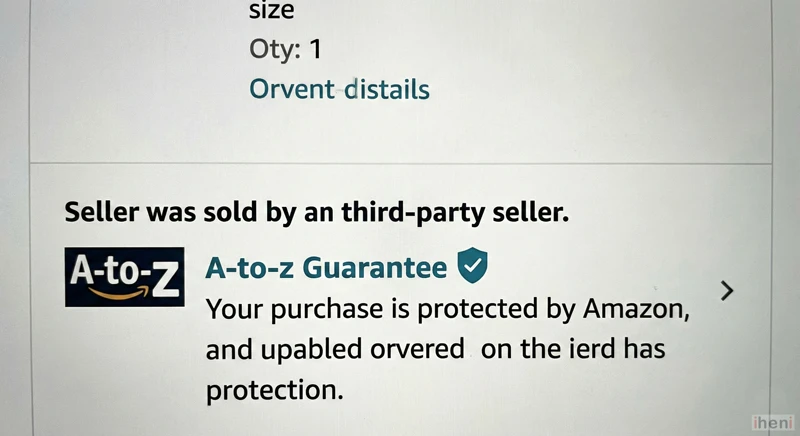
If the seller does not respond within 48 hours, you can file an A-to-z Guarantee Claim to get a refund directly from Amazon.
If you have identified the charge but need to talk to the specific seller who charged you, this video walks you through the exact button clicks to find them.
Step 3: The Nuclear Option (Bank Dispute)
Warning: Only do this if you are 100% sure it is fraud. If you dispute a legitimate Amazon charge, Amazon will often ban your account and blacklist your credit card to prevent future “fraud.”
⚠️ Critical Warning: If you file a dispute for a legitimate charge, Amazon will almost certainly lock your account for “Suspicious Payment Activity.” If this has already happened to you, read our guide on How to Fix Amazon Account Locked for Unusual Activity immediately.
- When to do this: If you see the charge, but you have no Amazon account, or if you suspect identity theft.
- Action: Call your bank and report the transaction as “Unauthorized.” The Federal Trade Commission (FTC) advises checking your credit report immediately if you suspect card theft.
Summary: Is Amzn MKTP US Safe?
Yes, it is generally safe. It is a standard billing descriptor for third-party sellers on Amazon.
- If you made a purchase: It’s just a split shipment or 3rd party seller.
- If you didn’t: Check with family, check archived orders, and then contact Amazon.
Do you have more questions about confusing bank statement codes? Drop a comment below and our community can help you identify them.
Frequently Asked Questions (FAQ)
Q: Is “AMZN MKTP US” a recurring monthly charge?
A: Usually, no. “AMZN MKTP US” typically refers to a one-time purchase from a third-party seller. However, if you see a recurring charge of $14.99, it is likely an Amazon Prime subscription or an Amazon Music Unlimited subscription that was accidentally activated.
Q: What is the phone number for AMZN MKTP US?
A: There is no separate phone number for Marketplace charges. You must contact Amazon Customer Service directly at 1-888-280-4331 (US). Be sure to have your “Charge ID” (the code on your bank statement) ready so they can locate the transaction.
Q: Why was I charged $14.99 by AMZN MKTP US?
A: if you see a recurring charge of $14.99, it is likely an Amazon Prime PMTS charge for a monthly subscription or channel renewal.
Q: Does “AMZN MKTP US” mean my card was hacked?
A: Not necessarily. In most cases, it is a legitimate charge for a split shipment (where one item came from Amazon and another from a 3rd party seller) or a family member using your card. Always verify with your household before canceling your credit card.
Q: What is “PWP*AMZN MKTP US”?
A: “PWP” stands for “Purchase with Purpose” or is sometimes used as a generic payment gateway code by certain banks. It is still a standard Amazon transaction. The important part of the code is “AMZN MKTP,” which confirms the merchant is Amazon.
Q: My payment for a Marketplace item keeps getting declined. What should I do?
A: Do not keep clicking “Retry Payment.” This can trigger the “Revision Loop” glitch. If you are stuck in a cycle where Amazon asks for a new card over and over, check our fix for the Amazon Payment Revision Loop.

